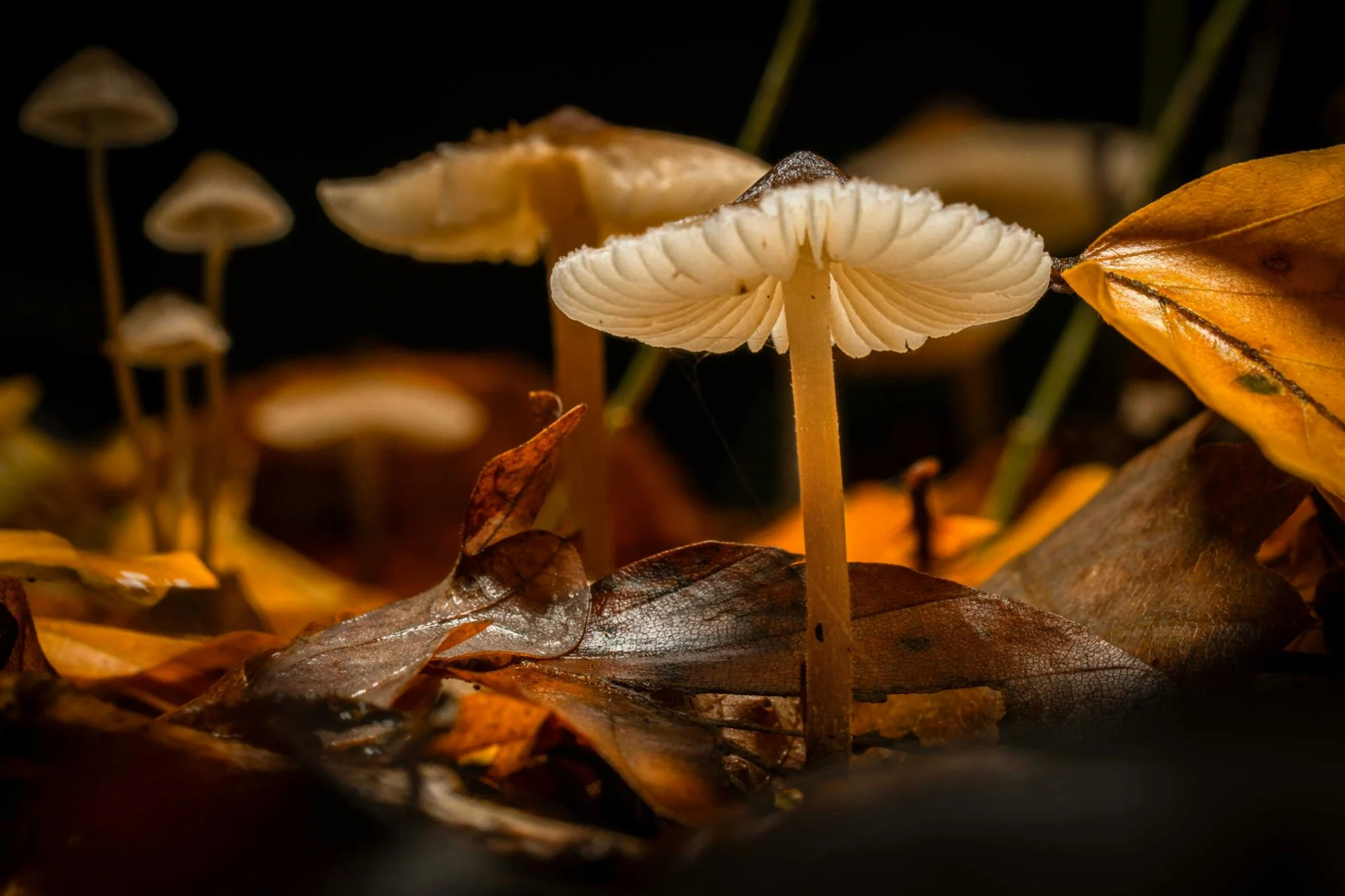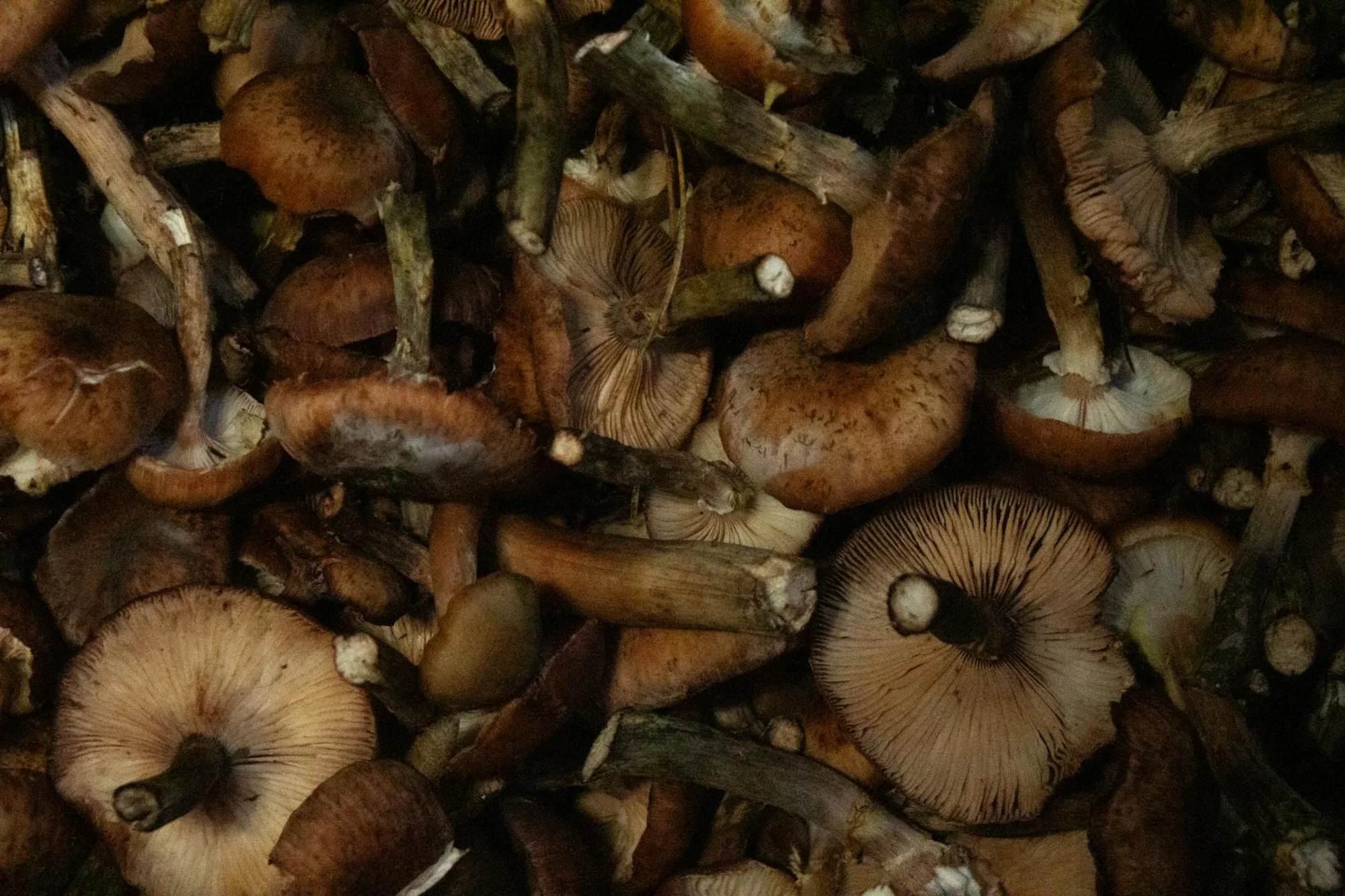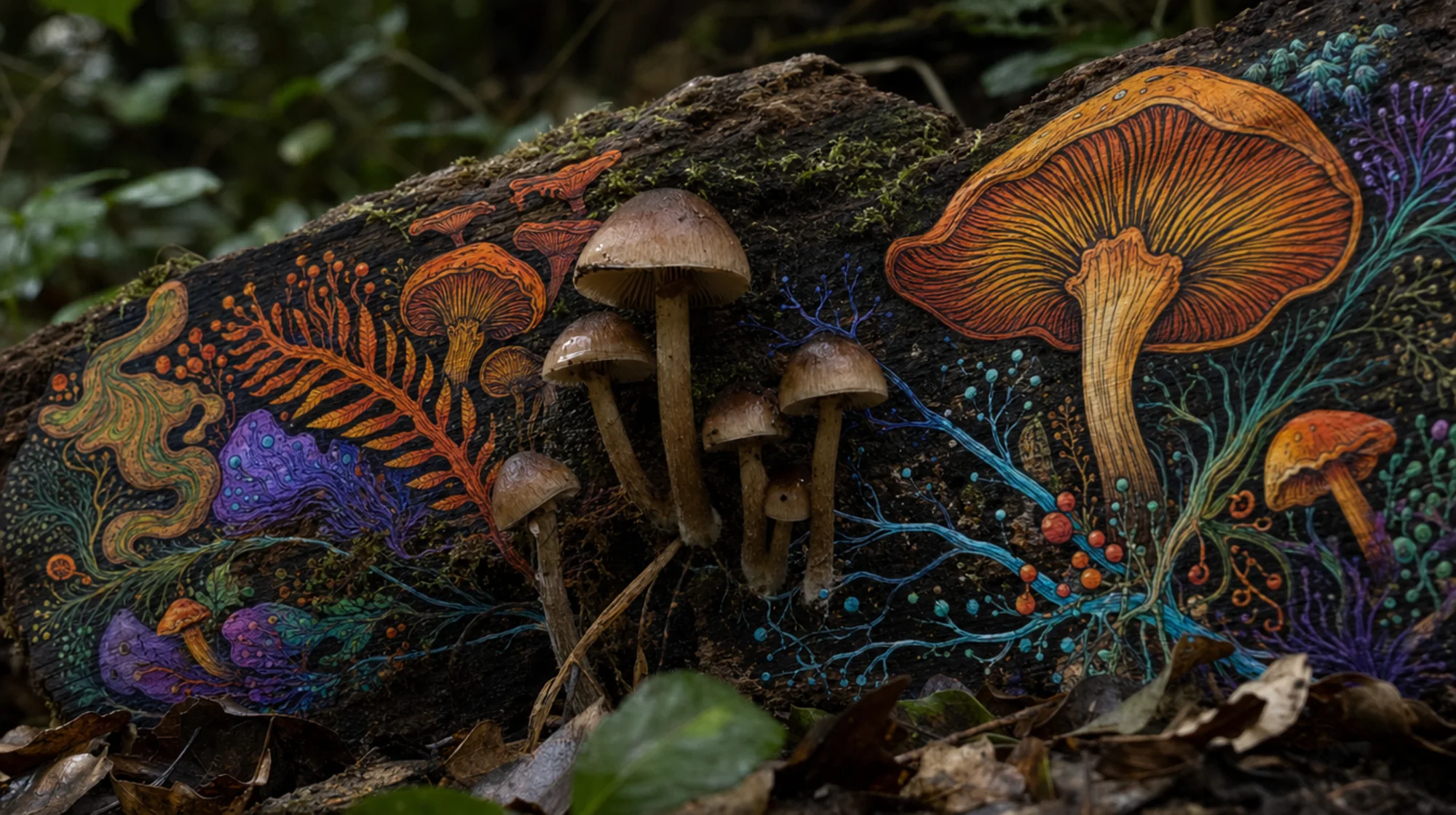
The mushroom did not evolve to expand your consciousness. It evolved to mess with insects in a pile of dung. The real origin story of psilocybin is stranger than the trip.
Nature does not build complicated molecules for fun. Making psilocybin takes a fungus several enzymes and a real metabolic investment, the biochemical equivalent of a small factory. So the obvious question, the one that took scientists decades to seriously ask, is why. Why would a mushroom go to all that trouble to synthesize a compound that, as far as the mushroom is concerned, does nothing useful. The answer has nothing to do with us.
The compound is ancient and it is not ours
Psilocybin has been around for a very long time, on the order of tens of millions of years, which means it was doing its job for eons before a single human ever ate one. Whatever it evolved for, it evolved in a world with no people in it. That alone should deflate the spiritual reading a little. The molecule that dissolves your ego at a retreat was originally a tool for a fungus growing in rotten wood and animal droppings. It did not develop this power to teach you anything.
The genes travel in a pack
The real weirdness is in the genetics. The instructions for making psilocybin are bundled into a tight cluster of about five genes, sitting together in the genome. That packaging matters. Genes that live together in a cluster can be copied and moved as a single unit, which sets up one of the odder findings in fungal biology.
Distant cousins, same recipe
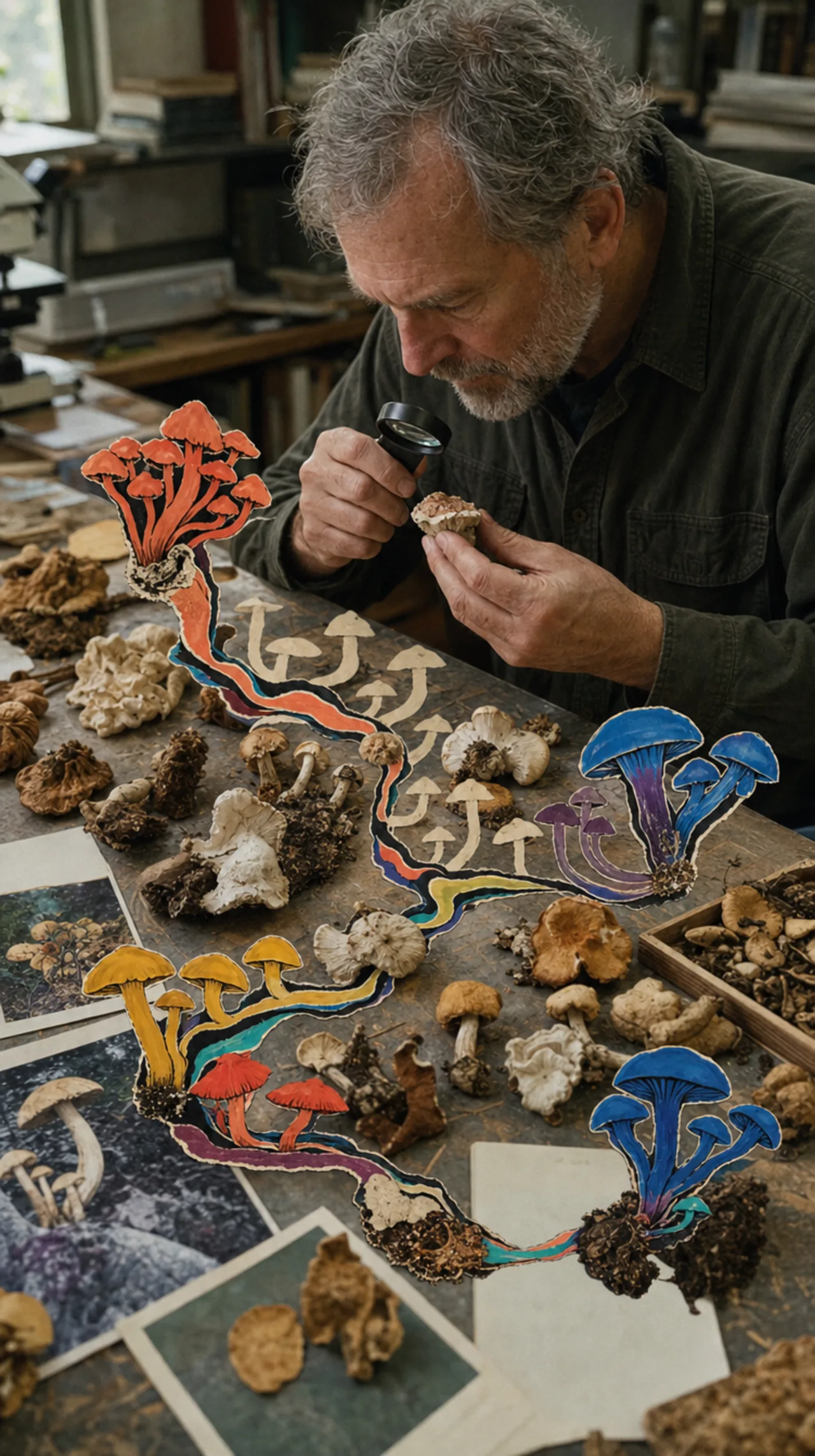
Here is the puzzle that cracked it open. Psilocybin shows up in mushrooms that are not closely related to each other. It is scattered across the family tree in a way that normal inheritance cannot explain. If the trait had simply passed from parent to offspring, you would expect it to sit neatly in one branch. Instead it pops up in distant lineages with plain relatives in between that make no psilocybin at all. Something skipped the family line.
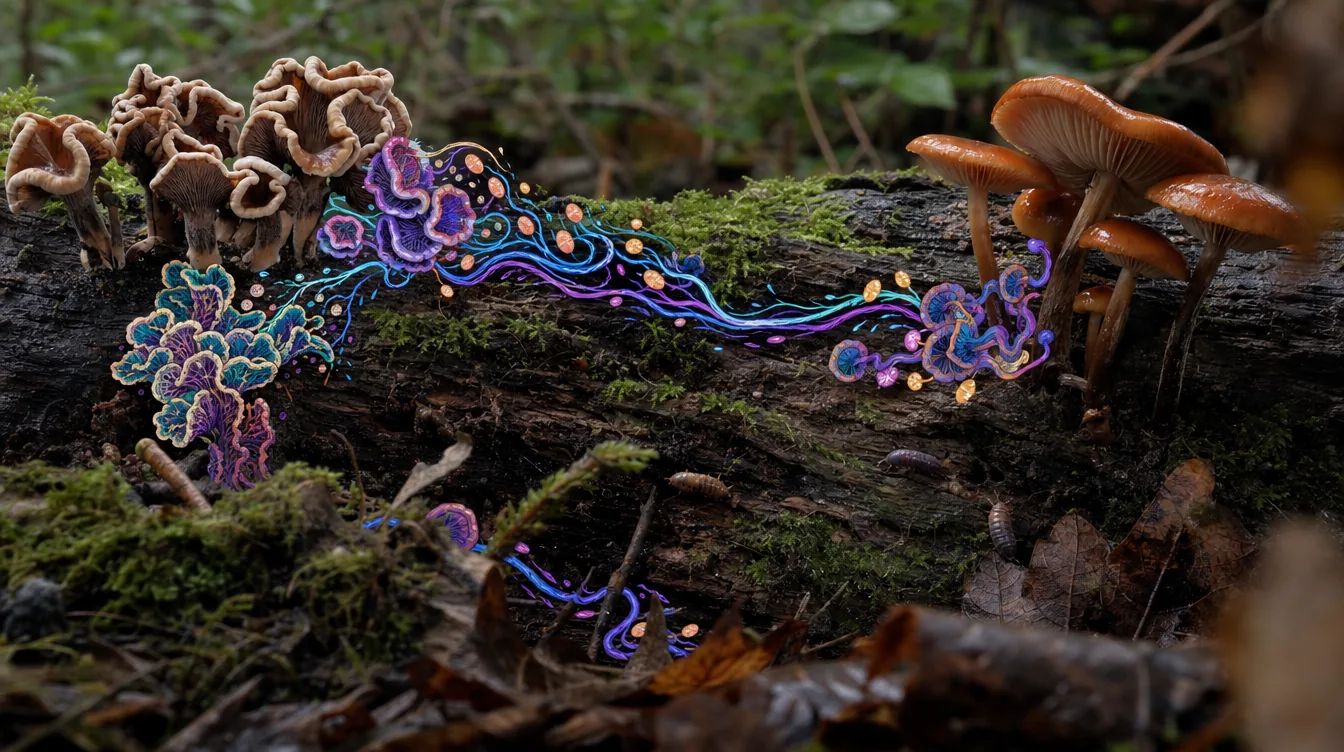
The recipe got passed sideways
That something is horizontal gene transfer, and it is exactly what it sounds like. Instead of inheriting the psilocybin cluster from an ancestor, unrelated fungi appear to have swapped the genes sideways, passing the whole packet between species that happened to live in the same neighborhood. Bacteria do this constantly. It is how antibiotic resistance spreads. In mushrooms it is far rarer, which is what makes the psilocybin case so striking. A research team led by Jason Slot at Ohio State laid out the genomic evidence for it in 2018.
Follow the dung
The next clue is where these fungi live. The psilocybin producers cluster in two grimy neighborhoods, animal dung and decaying wood. Both are crawling with insects. Both are places where a fungus is in constant competition with hungry invertebrates that would happily eat it or its food supply. That overlap is not a coincidence. The gene cluster seems to have moved between fungi that shared these insect-heavy niches, which points straight at what the compound might actually be for.
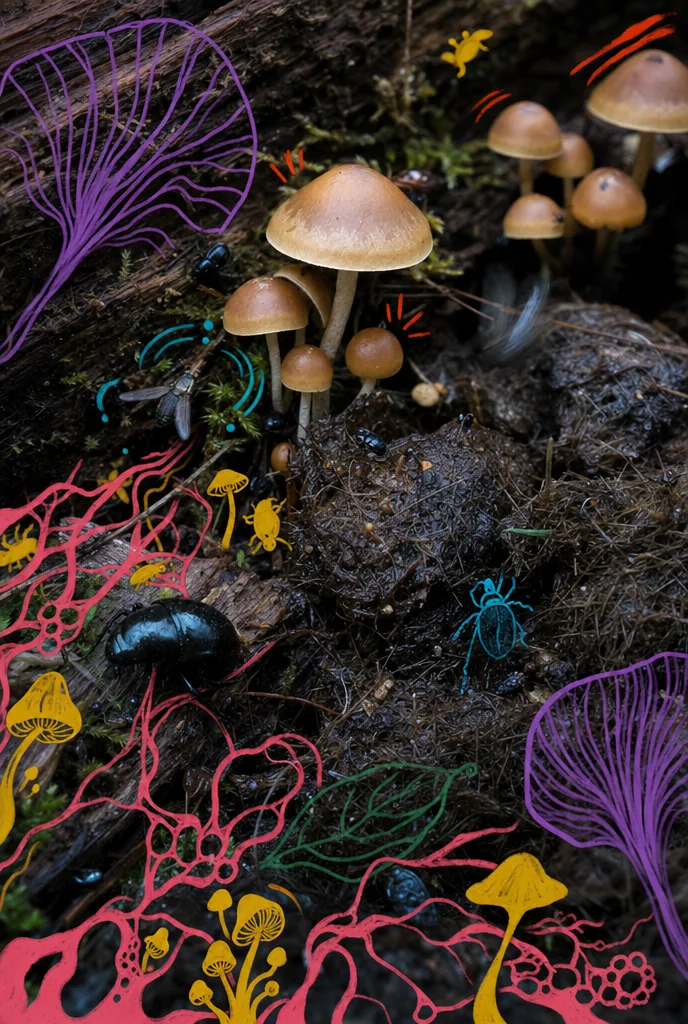
It might be bug repellent for the mind
This is where it gets good. In humans, psilocybin scrambles perception. In insects, tinkering with the same neurotransmitter system does something more practical. It kills their appetite. The leading hypothesis is that psilocybin evolved as a chemical defense, a way to make a bug that nibbles the mushroom lose interest in nibbling. As Slot's team put it, the fungus is not just poisoning its predators, it is altering their behavior to suit the fungus. Your transcendent afternoon is a side effect of an anti-snacking campaign aimed at beetles.
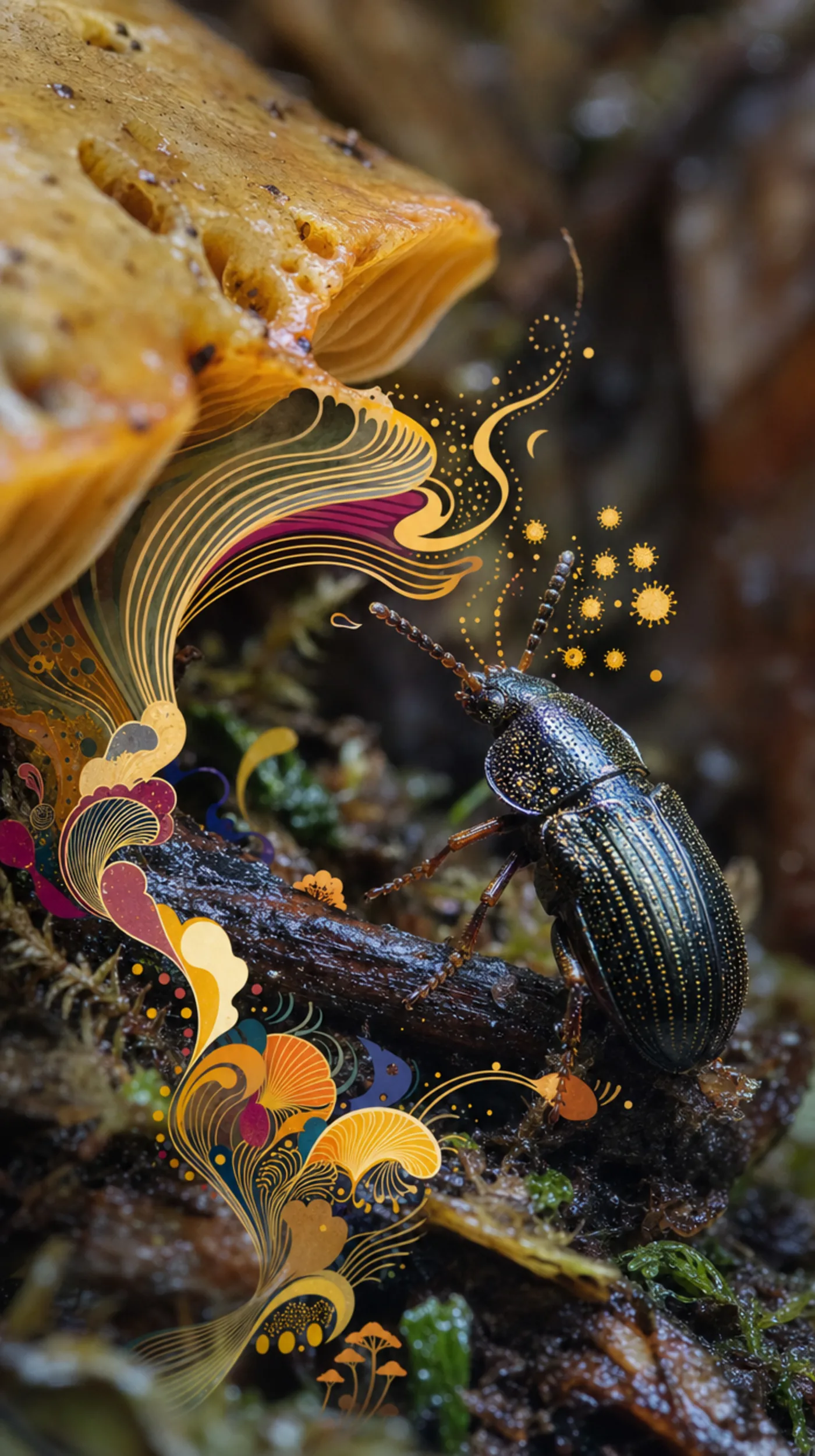
Why the theory holds up
It is still a hypothesis, and honest researchers flag it as one. But it explains the facts better than anything else on the table. It accounts for the scattered family tree, because a defense trait that helps in a specific habitat is exactly the kind of thing that would spread sideways between neighbors facing the same threat. It accounts for the dung-and-wood pattern. It accounts for why the trait persisted for millions of years, since a fungus that discourages its predators tends to survive to make more fungi. The trip is real. The intention behind it is not.
The part where it fits our brains anyway
Here is the accident that makes any of this possible for us. Psilocybin is built from tryptophan, the same amino acid your body uses to make serotonin. Once you swallow it, your system converts it to psilocin, and psilocin happens to slot into human serotonin receptors closely enough to switch them on. The fungus was aiming its chemistry at an insect nervous system. It hit ours by pure coincidence, because the underlying receptor machinery is ancient and shared across a huge range of animals. There was no target on your head. You are simply built from compatible parts, and the mushroom got lucky, or you did.
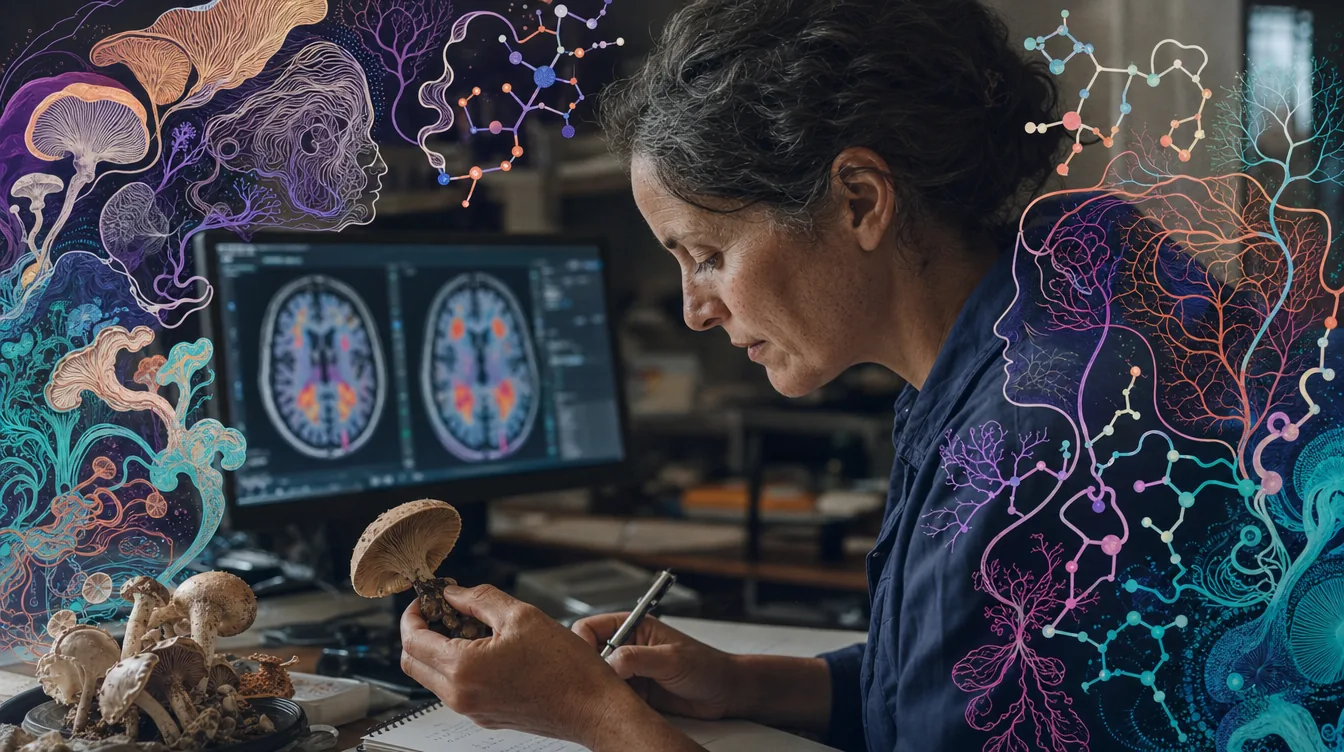
What this changes about how we talk
None of this makes psilocybin less interesting. If anything it makes it stranger, that a molecule shaped by insect warfare happens to fit human serotonin receptors well enough to rearrange a person's sense of self. That is a genuine accident of chemistry, not a message from the fungus. Our primer on a standout Psilocybe strain and our explainer on how the compound acts in the brain cover the rest without the mysticism markup. The mushroom was never trying to reach you. It was trying to get a beetle to put down the fork.
Frequently Asked Questions
Why do mushrooms make psilocybin in the first place? The leading hypothesis is chemical defense. The compound suppresses appetite in insects, which likely protected the fungi in insect-heavy habitats like animal dung and rotting wood.
How old is psilocybin? Estimates place it at tens of millions of years, long before humans existed. Whatever it evolved for, it did not evolve for us.
What is horizontal gene transfer? It is the movement of genes between organisms outside of normal reproduction. The psilocybin gene cluster appears to have passed sideways between unrelated fungi that shared the same habitat.
If it evolved for insects, why does it affect the human brain? Coincidence. Psilocybin is built from tryptophan and converts to psilocin, which fits human serotonin receptors because that receptor machinery is ancient and shared across many animals.
Are all psilocybin mushrooms closely related? No. They are scattered across the fungal family tree, with plain, non-psychedelic relatives in between. That odd pattern is exactly what tipped scientists off to the sideways gene transfer.
Ready to apply what you've learned?
Browse lab-tested magic mushrooms, edibles, microdose capsules and teas — shipped discreetly across the United States.